
Bringing community voices, local stories and creative ideas into design.
Co-design creates an opportunity for communities to move beyond traditional consultation and become active contributors to the creative outcomes that shape their places. It brings together artists, Traditional Owners, community members and designers to explore ideas, share perspectives and contribute directly to the visual identity of a place.
Nicole's approach integrates creative practice into community engagement, using visual art and collaborative making as a way to unlock ideas, encourage participation and capture the unique stories, character and identity of a place. Rather than simply asking people what they think, we create opportunities for them to express their ideas through hands-on creative activities. This might involve drawing, painting, collage, pattern making, mark making or other creative processes that allow people to communicate ideas in ways that traditional consultation methods don't always capture. It creates a relaxed setting that opens the way for authentic connection, personal experience and out of the box thinking. Importantly, engagement is designed to encourage participation from people who may not feel confident contributing in large groups or formal settings.
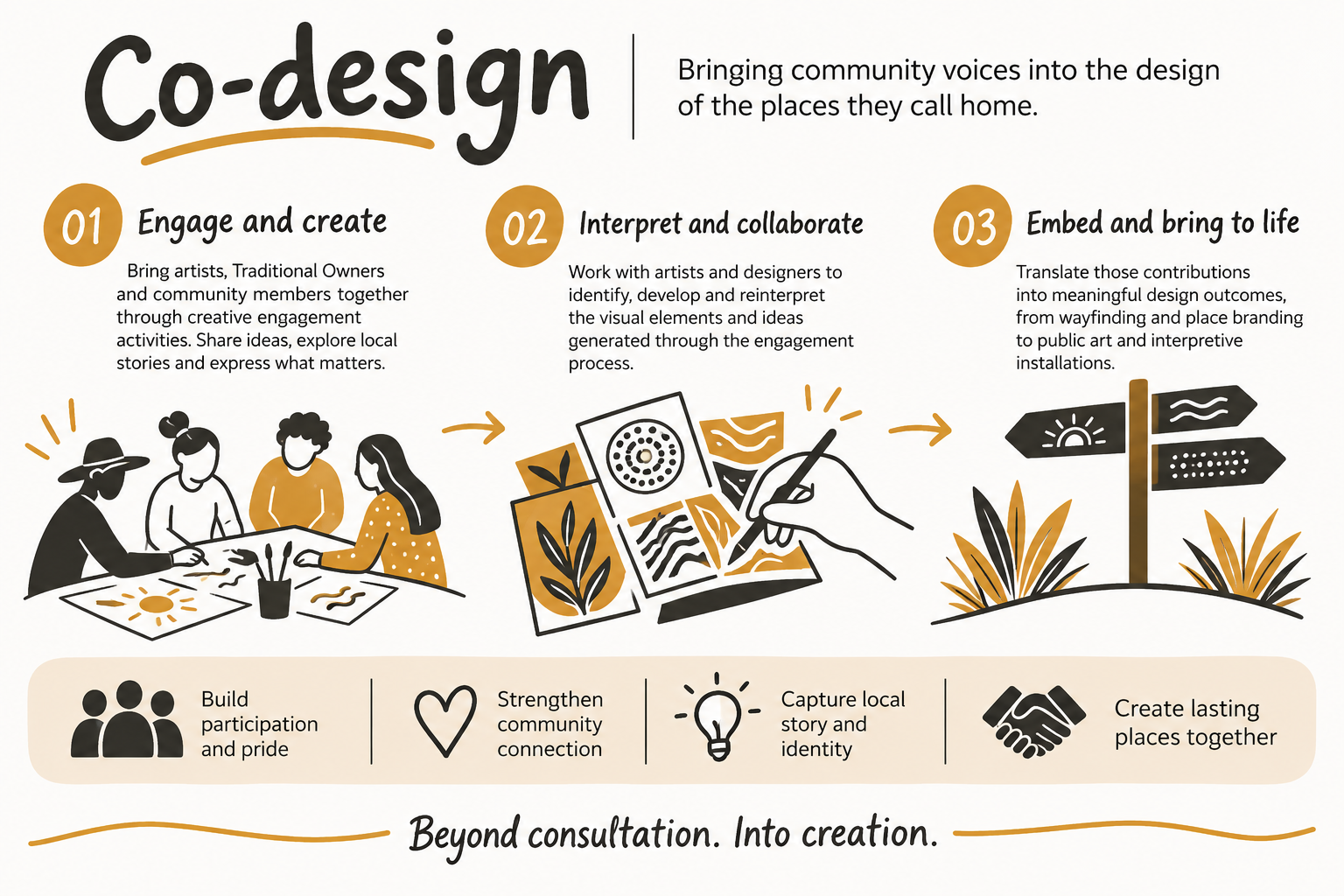
Importantly, the creative work doesn't stop at the engagement session. Working alongside the project artist or designer, the visual elements, imagery, patterns, colours and ideas generated through these activities are explored and reinterpreted as part of the final design. These contributions can then be incorporated into wayfinding signage, place branding, public art, interpretive installations and other elements of the built environment.
Engage and Create
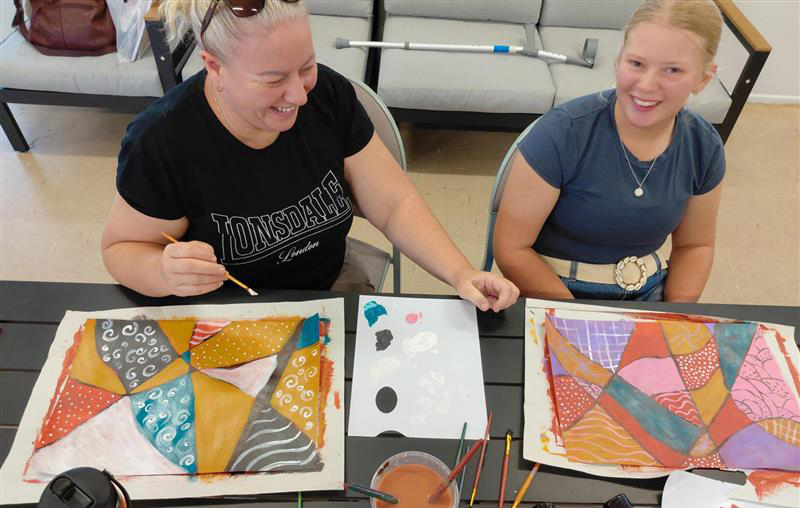
Making space for creativity, conversation and participation.
Creative and tactile activities can change the entire dynamic of a community engagement session. They provide a more relaxed and accessible way for people to participate, encouraging conversations and connections that might not emerge through a traditional workshop or consultation process. Artists and creative people, in particular, are often more inclined to participate when there is an opportunity to make, experiment and contribute creatively.
By introducing visual art activities into engagement, people can explore their relationship with a place, share stories, identify local characteristics and express what matters to them. The process creates an opportunity for different voices and perspectives to come together, while giving participants something tangible to contribute to the project.
Interpret and Collaborate
Turning community ideas into meaningful design elements.
The real value of co-design is in what happens after the engagement. The creative contributions made during workshops become a starting point for further exploration and collaboration between the community, artists and designers.
Working with the project artist or design team, these ideas can be developed, refined and reinterpreted into visual elements that reflect the character, stories and aspirations of the community. A pattern created during a workshop might inspire a wayfinding design; a collection of drawings might inform a public artwork; or colours, shapes and imagery might become part of a place brand.
This is not about reproducing workshop artwork literally. It is about recognising the ideas and creative expression behind it and translating those contributions into considered design outcomes, while retaining the connection to the people and place that inspired them.
Embed and Bring to Life
Creating places that reflect the people, stories and identity of a community.
When people can recognise their own ideas and contributions in the finished design, the relationship between the community and the project changes. The outcome is no longer simply something delivered for a community, but something they have helped shape.
Whether incorporated into wayfinding signage, public art, interpretive elements, community spaces or place branding, these visual contributions create a tangible connection between the engagement process and the finished project. They help tell local stories, reinforce a sense of identity and create a stronger sense of ownership, connection and community pride.
Co-design can be particularly powerful when working with Traditional Owners and First Nations communities, providing an opportunity for cultural knowledge, stories, values and connections to Country to be reflected in the design of places and public spaces. Rather than limiting First Nations participation to reviewing or commenting on a proposed design, the process creates opportunities for Traditional Owners to actively contribute to its development from the outset.
By providing a culturally respectful and sensitive environment for creative expression, participants can share ideas, visual concepts, patterns and stories in ways that are meaningful to them and appropriate to their cultural context. Working alongside Traditional Owners, these contributions can inform the visual language of a project and be thoughtfully incorporated into the finished design of signage, wayfinding, public art and interpretive elements.
This is particularly important because it creates an opportunity for First Nations perspectives, cultural values and connections to Country to be visible and meaningfully represented in the places people move through every day. It also recognises that cultural knowledge and artistic expression belong to the people and communities who share them. Respecting cultural protocols, community authority, cultural and intellectual property, permissions and decisions about what can be shared publicly is fundamental to this process.
The result is an opportunity to create places that acknowledge and celebrate the continuing connection of Traditional Owners to Country, while ensuring their contributions are not simply consulted upon, but genuinely valued and reflected in the finished outcome.
The benefits of this approach extend well beyond the finished artwork or design. By bringing creativity into engagement, co-design can:
- Broaden participation: Create more accessible and inviting opportunities for artists, creatives and community members to become involved.
- Give people a tangible voice: Move beyond verbal feedback and provide opportunities for people to physically contribute ideas and creative elements.
- Strengthen community ownership: Help people see a direct connection between their participation and the finished outcome.
- Celebrate local identity: Capture the stories, character, culture and distinctive qualities that make a place unique.
- Build stronger relationships: Create opportunities for artists, Traditional Owners, community members and project teams to work together.
- Create more meaningful design: Ensure the finished outcome is informed by the people, perspectives and stories of the place.
Ultimately, co-design is about creating a bridge between community engagement and creative practice. It ensures that the people who know a place best have an opportunity to help shape how that place is represented, experienced and remembered.